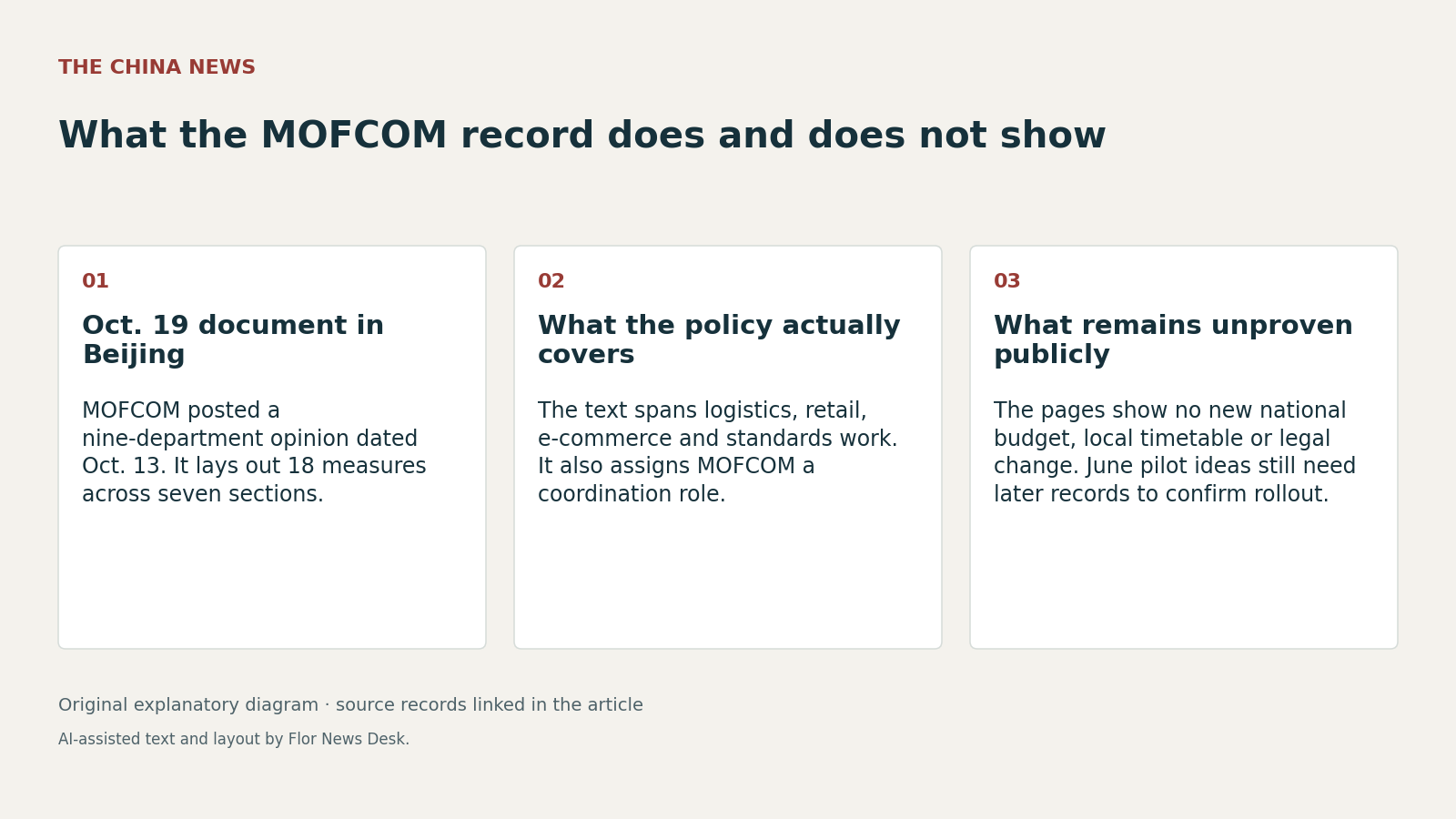

Beijing’s Ministry of Commerce on October 19 published a nine-department opinion on accelerating 科技兴商, or using technology to invigorate commerce, with a document date of October 13 and a page status of currently effective. On its face, this is a central coordination package: the page sets out 18 measures in seven sections, but it does not itself read as a new law, a national budget decision or evidence that local projects have already begun MOFCOM opinion.
That distinction matters because the opinion is broad and operational in tone. MOFCOM says the signatories are 商务部, 中央网信办, 国家发展改革委, 教育部, 科技部, 工业和信息化部, 文化和旅游部, 中国人民银行 and 市场监管总局. The text names artificial intelligence, big data, the Internet of Things, cloud computing, blockchain, digital twins and embodied intelligence for use across commerce. Its examples are concrete: smart warehouses, smart logistics equipment, unmanned delivery, digital upgrades for agricultural wholesale markets, and retail tools for layout, inventory, delivery, traceability and after-sales management MOFCOM opinion.
The more revealing part is not the technology list but the governance list. The same page ties e-commerce to quality upgrading, CCC certification checks linked to platforms, pilot reform of CCC marks in some fields with traceability QR codes, and promotion of the national standard series 《人工智能终端智能化分级》 MOFCOM opinion. That suggests Beijing is treating “tech for commerce” as a rules-and-infrastructure agenda as much as a demand stimulus. In analytical terms, the package is trying to shape how goods move, how platforms verify them and how consumer-facing AI devices are classified, not only to encourage more gadget sales.
A second MOFCOM record, published on June 18, helps show the policy lineage but also the limits of the public record. In that interpretation, a 市场建设司 official described an earlier “人工智能+消费” measure with five areas and 17 measures, including first-launch platforms for AI goods, an “人工智能进万家” campaign, clusters and experience centers, scenario guides, case selection and a national AI application pilot base for the consumption field MOFCOM interpretation. Because that page is an explanatory note dated June 18, its future-tense program language does not establish that those clusters, centers or the pilot base existed by October 19.
The October opinion is similarly careful on money. It says support should be coordinated through existing channels and encourages market-based finance for new consumption scenarios and commercial-facility upgrades, while MOFCOM says it will coordinate implementation with relevant departments MOFCOM opinion. That wording points to policy alignment more than a fresh, dedicated spending line. Without published local implementation notices, budget allocations through those “existing channels,” named pilot locations, standards notices or later outcome reports, readers cannot tell which parts will move fastest or at what scale.
For businesses and local officials, the practical reading is narrower than the headline. The central government has signaled that commerce modernization now includes logistics automation, platform compliance and AI-linked consumer services under one frame, and it has assigned MOFCOM a coordinating role MOFCOM opinion. But the public record available on October 19 still shows announced duties and intended tools, not completed implementation, measurable outcomes or an immediate legal change. The next decisive evidence will have to come from provincial or municipal rollout documents, financing records, standard-setting publications and specific pilot announcements, not from the central summaries alone.