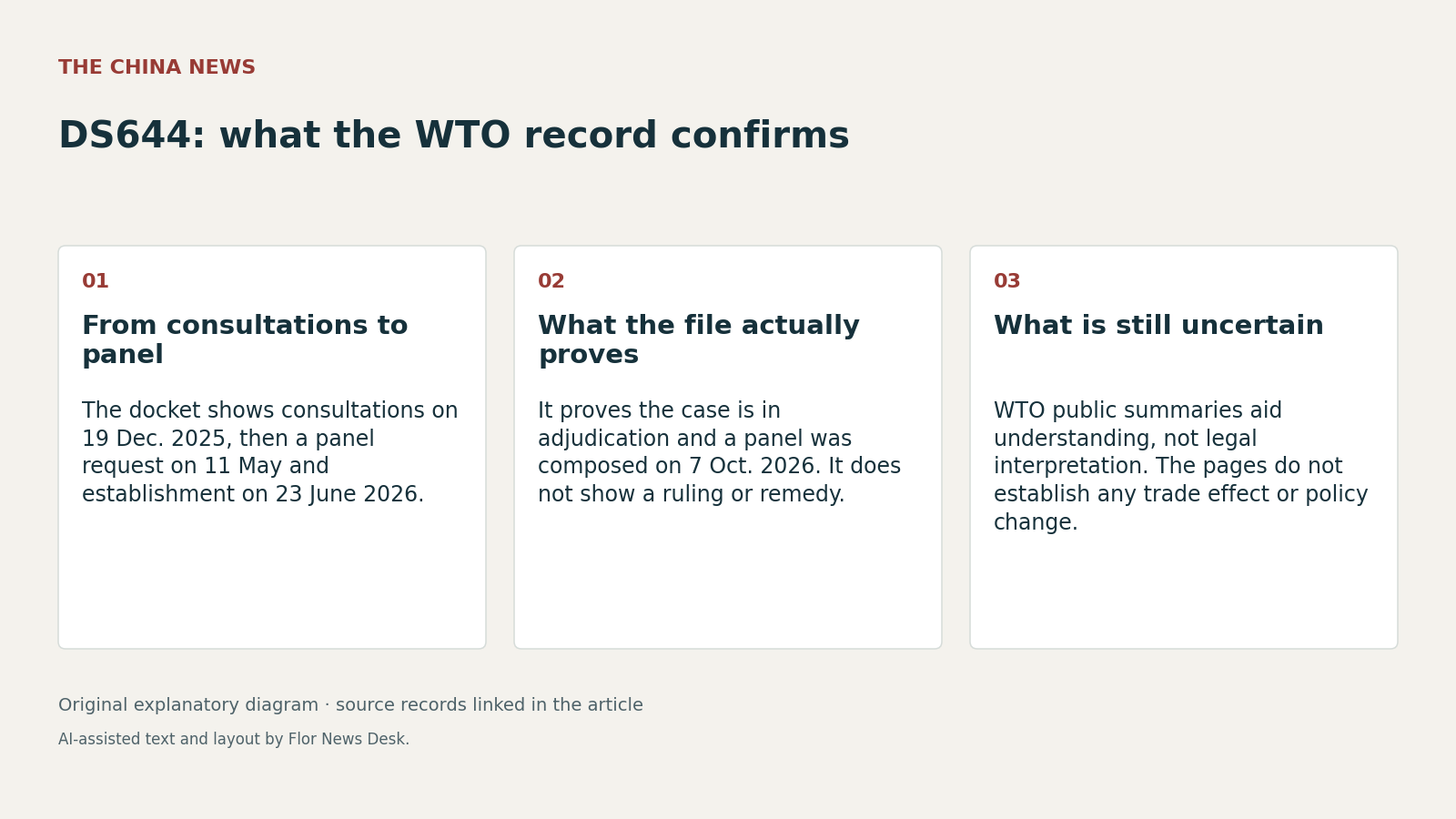

In Geneva, the WTO’s public docket now shows China’s dispute against India, DS644, has moved beyond consultations into a formal panel process. The case page records consultations requested on 19 December 2025, China’s panel request on 11 May 2026, deferral of establishment on 22 May 2026, establishment by the Dispute Settlement Body on 23 June 2026, and panel composition on 7 October 2026. Those dates matter because they fix the procedural stage of the case, not because they settle the merits. WTO DS644 case page WTO DSB meeting news, 23 June 2026
The public file also defines the dispute’s scope more precisely than broad talk of a solar trade row. The WTO case page says China challenged India’s tariff treatment for certain technology products and separate measures in a Solar Module Programme that China described as favouring domestic over imported goods or otherwise discriminating against goods of Chinese origin. The same page says China invoked GATT 1994 provisions on tariff commitments, plus provisions in the TRIMS and SCM agreements related to the programme. That is a claim set, not a finding. WTO DS644 case page
What the record proves is narrower than some readers may assume from the word panel. The 23 June 2026 WTO news item says the DSB agreed to China’s second request after India had said at the 22 May 2026 meeting it was not ready to accept the first one. The case page then shows the panel was composed on 7 October 2026. From those two steps, it is reasonable to conclude that the dispute is in adjudication rather than only in diplomacy. But neither page records a panel report, legal findings, recommended remedy, implementation step or measured trade effect. WTO DSB meeting news, 23 June 2026 WTO DS644 case page
The public sources also preserve disagreement without resolving it. The 23 June 2026 news item attributes to China the position that consultations had not resolved its concerns and that India’s measures were inconsistent with WTO rules. The same item attributes to India the position that it regretted the second panel request and had already shown during consultations that its measures complied with WTO rules. Those are the parties’ stated positions in a DSB meeting record for public understanding; they are not proof that either side is right. WTO DSB meeting news, 23 June 2026
A second limit is about the quality and completeness of the public record itself. The case page says its summary was prepared by the WTO Secretariat for general information and not to affect members’ rights and obligations. The 23 June 2026 news item gives a similar caution, saying it is not a legal interpretation or complete account. The brief for this draft also notes that the third-party roster on the case page is longer than the list in the news item, which names 12 members reserving third-party rights. That difference does not alter the case stage, but it is a reminder not to overread summary pages. WTO DS644 case page WTO DSB meeting news, 23 June 2026
For Chinese exporters and policymakers, the practical takeaway is therefore limited but real. The WTO file now signals a live, formal challenge to Indian measures affecting solar and information-technology goods. That may shape legal and policy planning because the dispute has crossed into a structured process with a composed panel. Yet the same record does not show that India has changed any tariff line, altered any programme rule, or been ordered to do so. Treating panel establishment as if it already changed commercial conditions would go beyond the evidence in the cited materials. WTO DS644 case page WTO DSB meeting news, 23 June 2026
Until a panel report or later formal record appears, the strongest verified description is procedural: China has moved DS644 into a constituted WTO panel process against India, and the merits remain undecided in the public record cited here. WTO DS644 case page